
How to Identify Antique Glassware Patterns and Manufacturer Marks Like a Pro
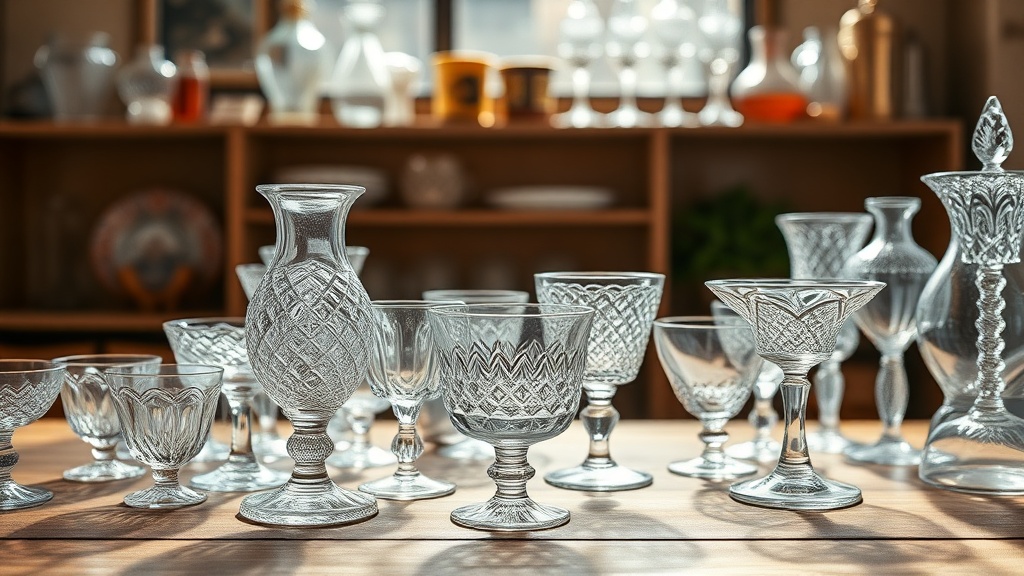
You’re at an estate sale, and a dusty bowl catches the light just right — deep cobalt blue with an intricate, almost lace-like rim. It feels heavy, cool to the touch, and there’s no barcode or “Made in China” sticker in sight. Your heart does that little flip. But then the questions start: Who made it? How old is it? Is it worth $5 or $500? Learning how to identify antique glassware patterns and manufacturer marks turns those exciting moments into confident purchases. You don’t need a museum curator’s eye — just a methodical approach, a few reference tools, and an understanding of what clues to look for first.
Start with the Maker’s Mark: The Glassmaker’s Signature
The fastest way to narrow down a piece’s origin is to find a manufacturer mark. Many American and European glass companies left their names, initials, or a specific logo somewhere on the piece — you just have to know where to look and what you’re seeing.
Flip the piece over and examine the bottom in good light. Run your fingertip gently across the base; raised letters or symbols are often easier to feel than see on clear glass. Common marks include:
- Embossed marks – Raised letters spelling out names like “Fenton,” “Northwood,” “Heisey,” “Cambridge,” or “Imperial.” Fenton often used an oval with the word “Fenton” inside, while Heisey used a prominent “H” inside a diamond.
- Acid-etched marks – These appear frosted and can be faint. Tilt the piece under a lamp to catch the etching. Cambridge Glass used a “C” inside a triangle, and early Steuben pieces bear a delicate “Steuben” in script.
- Paper labels – If you’re lucky enough to find an original foil or paper label still attached, treat it like gold. Labels from companies like Tiffin, Duncan & Miller, or Paden City instantly confirm the maker, but they’re fragile. Photograph it before it flakes away.
If the mark is only a number or a letter, don’t give up. Many factories used mold numbers that can be cross-referenced in collector’s guides. For instance, Fenton’s mold numbers (like #3965 or #1605) lead you directly to the pattern name. Bookmark a reliable online database — the Glass Lovers Glass Database and the Early American Pattern Glass (EAPG) Society’s pattern index are free and searchable. When you’re learning how to identify antique glassware patterns and manufacturer marks, these resources become your best friends.
Decode the Pattern: Shape, Motif, and Decoration
Even without a mark, the pattern itself often screams its maker’s name