
Vintage Costume Jewelry Identification Beginner Guide: How to Spot $5 Flea Market Finds Worth $500+
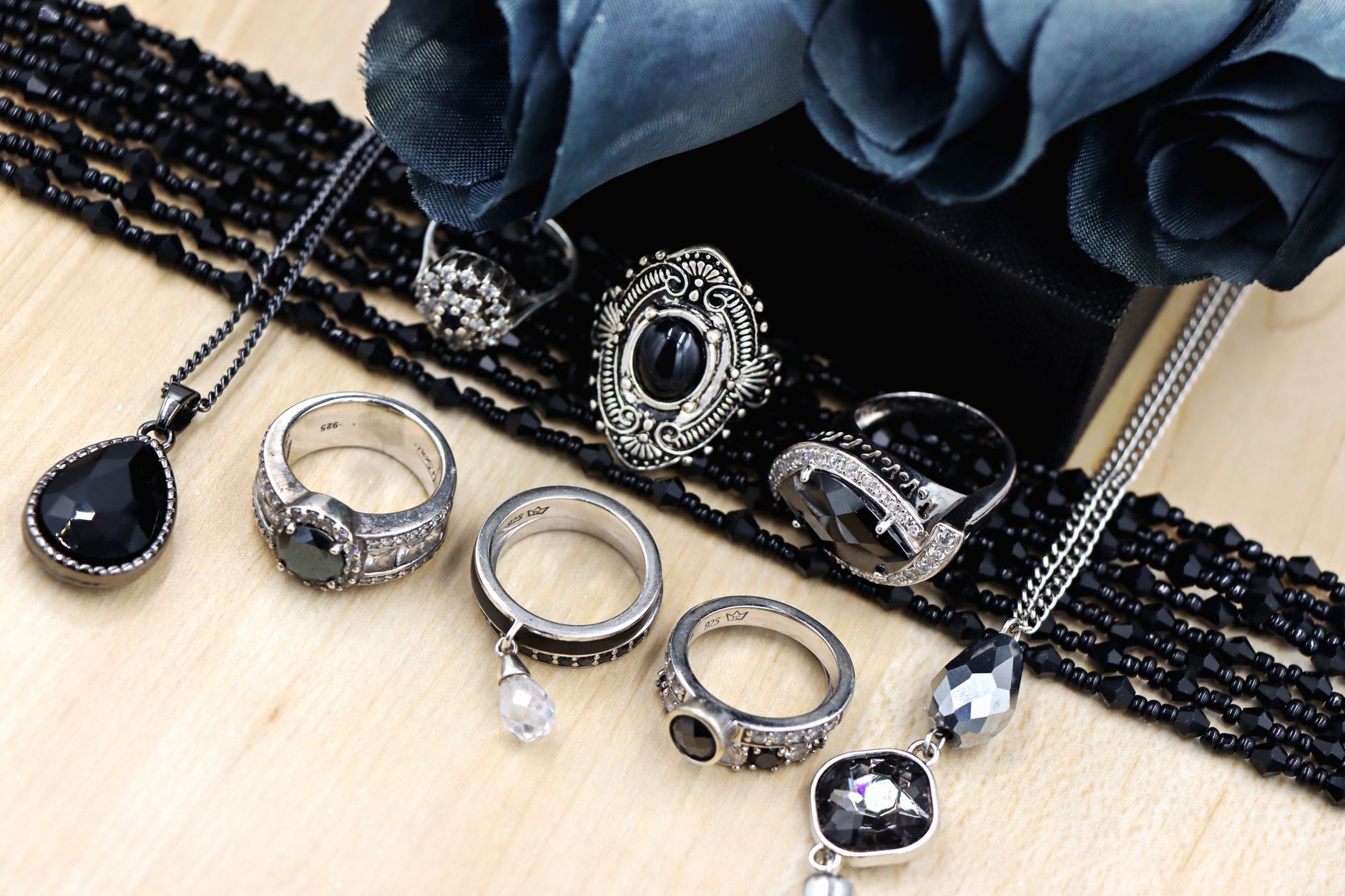
The 2026 costume jewelry market is absolutely exploding—and not where you’d expect. While fine jewelry auctions at Sotheby’s grab headlines, eBay’s vintage costume jewelry category saw a 34% volume increase in the first half of 2026, with unsigned 1950s-60s pieces outperforming signed mid-tier brands. TikTok’s #vintagejewelryhunt hashtag has crossed 2.1 billion views, and estate sale companies from Atlanta to Portland are now specifically advertising “vintage jewelry preview hours” for the first time ever. The reason? A generation of new collectors has discovered that the $5 brooch buried in a shoebox at a garage sale might be a rare Schreiner, Trifari, or unsigned Coro worth hundreds—or that the “ugly” 1980s enamel necklace is actually a coveted Lea Stein Paris piece.
This vintage costume jewelry identification beginner guide cuts through the noise. No gemology degree required. No $500 loupe. Just the field-tested methods working right now in 2026.
Why 2026 Is the Perfect Storm for Beginners
Three forces have collided to create unprecedented opportunity for newcomers.
First, the great estate transition continues. Baby boomers born 1946-1954 are now 72-80, and their collections—built during costume jewelry’s golden age—are hitting estate sales in massive volume. Second, authentication technology has democratized. Your smartphone’s macro camera and free apps like Google Lens can now identify signatures and construction details that once required expert eyes. Third, the “quiet luxury” backlash against minimalism has made bold, colorful vintage pieces the statement accessory of 2026.
The result? More inventory, better tools, and hungry buyers. But only if you can actually identify what you’re looking at.
The 5-Minute Hallmark Assessment That Separates Treasure from Trash
Hallmarks are your fastest identification tool, but the approach matters. Here’s the 2026-tested sequence:
Start with location, not magnification. Most costume jewelry marks are stamped on the back of clasps, on extended tab findings, or inside brooch mechanisms—not hidden in microscopic engravings. Run your thumb across these areas before reaching for any loupe.
Know the hierarchy of marks:
- Designer signatures (Trifari, Eisenberg, Hattie Carnegie, Miriam Haskell): Most valuable when accompanied by copyright symbol © or patent numbers
- Manufacturer codes (Coro, Avon, Sarah Coventry): Indicate mass production but collectible in specific lines
- Country of origin (“Japan,” “West Germany,” “Czechoslovakia”): Critical for dating; “Czech” pre-1993, “Czech Republic” post-1993
- Metal content (“Sterling,” “1/20 12K GF”): Surprisingly rare in costume jewelry; when present, value jumps
The 2026 red flag: “Vintage-style” marks are proliferating. Look for “Inspired by,” “Collection,” or suspiciously perfect stamping depth—these indicate reproductions flooding Amazon and Temu. Authentic vintage marks are often slightly uneven from hand-stamping or show wear from decades of use.
Construction Clues Your Fingers Can Read
Vintage costume jewelry identification for beginners requires developing tactile literacy. The pieces tell you their story through weight, temperature, and mechanism design.
Weight tells era: 1940s-50s pieces often feel surprisingly heavy due to pot metal bases and hand-set stones. 1970s-80s pieces feel lighter, with more plastic and glued construction. A “heavy” 1980s piece is suspicious—likely a reproduction using older techniques.
Temperature reveals materials: Genuine Lucite and Bakelite warm quickly in your hand. Modern plastics stay cold. Celluloid feels slightly waxy and is extremely flammable (the “hot pin test” works but risks damage—use only on clearly damaged pieces).
Clasp evolution is datable:
- C-clasps with tubular hinges: Pre-1910
- C-clasps with safety catches: 1910-1940s
- Roll-over clasps: 1940s-present (dominant from 1960s)
- Lobster clasps: 1970s-present
The 2026 finding: European pieces, especially French and Italian, often used distinctive spring-ring clasps with specific tension profiles. French 1950s-60s pieces have a “snappy” close; Italian pieces from the same era feel more gradual. This distinction matters because unsigned European pieces are currently undervalued by 20-30% compared to signed American equivalents.
The “Unsigned” Advantage: Finding Hidden Gems in 2026
Here’s what most beginner guides won’t tell you: the biggest profits in 2026 are in unsigned pieces correctly attributed.
Signed Trifari pieces are fully priced in the market. But a skilled eye can spot unsigned Trifari from the 1950s “Jelly Belly” line by its distinctive domed Lucite cabochon and three-pronged stone setting—currently selling for $180-400 unsigned versus $400-800 signed.
Four unsigned identification shortcuts:
-
Schreiner: Look for “upside-down” rhinestone settings (pointed backs facing up), creating distinctive depth. Also check for heavy, almost architectural construction. Unsigned Schreiner brooches currently trade at 40-60% below signed pieces.
-
Miriam Haskell: Hand-wired construction leaves visible loops on the back. Even unsigned, the layered, almost chaotic floral arrangements and Russian plating gold tone are recognizable.
-
Hattie Carnegie: Dramatic scale and unusual color combinations. Her pieces often feel “too much”—that’s the signature. Current 2026 trend: oversized unsigned Carnegie animal brooches up 55% year-over-year.
-
Lea Stein: The “V” shaped pin back and laminated celluloid layers with distinctive graphic patterns. Her 1960s-70s geometric pieces are frequently unsigned but the construction method is unmistakable.
Where to Practice: 2026’s Best Training Grounds
Theory means nothing without repetition. Here’s where to build your eye affordably:
Estate sale “box lots” in affluent suburbs: The jewelry box dumped in a $10 lot because “nothing looked real.” Your best training ground. In 2026, Tuesday-Wednesday estate sale previews in retirement communities (Scottsdale, Palm Beach, Naples) are consistently yielding overlooked pieces as companies rush to clear inventory.
Church rummage sales: Unsorted, unpriced, often donated by families who don’t recognize grandmother’s 1950s collection. The 2026 advantage: many churches have shifted to online pre-registration, letting you research sale contents.
Thrift store “color bag” jewelry: Goodwill and Savers often bag costume jewelry by color. The $3.99 blue bag might contain a single Coro Duette clip. The sorting is random enough that pieces slip through.
Critical 2026 update: Facebook Marketplace “jewelry lots” have become competitive, but sellers increasingly misidentify. A “vintage 1920s” lot is often 1980s reproduction. Use the construction clues above before any purchase.
Your First 30 Days: A Structured Learning Plan
Week 1: Handle everything. Visit 10 estate sales, touch 200 pieces, photograph 20 hallmarks. Build tactile memory.
Week 2: Focus on one designer. Study Trifari’s 1950s crown mark variations or Schreiner’s setting techniques. Deep, not wide.
Week 3: Make three small purchases under $20 each. Get them wrong. That’s the tuition.
Week 4: List one piece for sale. The market will teach you what you missed.
Conclusion: Your Vintage Costume Jewelry Identification Beginner Guide to Action
This vintage costume jewelry identification beginner guide gives you what 2026’s market demands: practical skills for an unprecedented moment. The inventory is flowing, the tools are accessible, and the knowledge gap between beginners and “experts” has never been narrower. The collectors building serious collections this year aren’t starting with $5,000 budgets—they’re starting with attentive eyes, patient hands, and the willingness to learn from mistakes.
Pick one section from this guide. Apply it this weekend. The $5 find that funds your next ten hunting trips is sitting in a box somewhere, waiting for someone who finally knows what to look for.